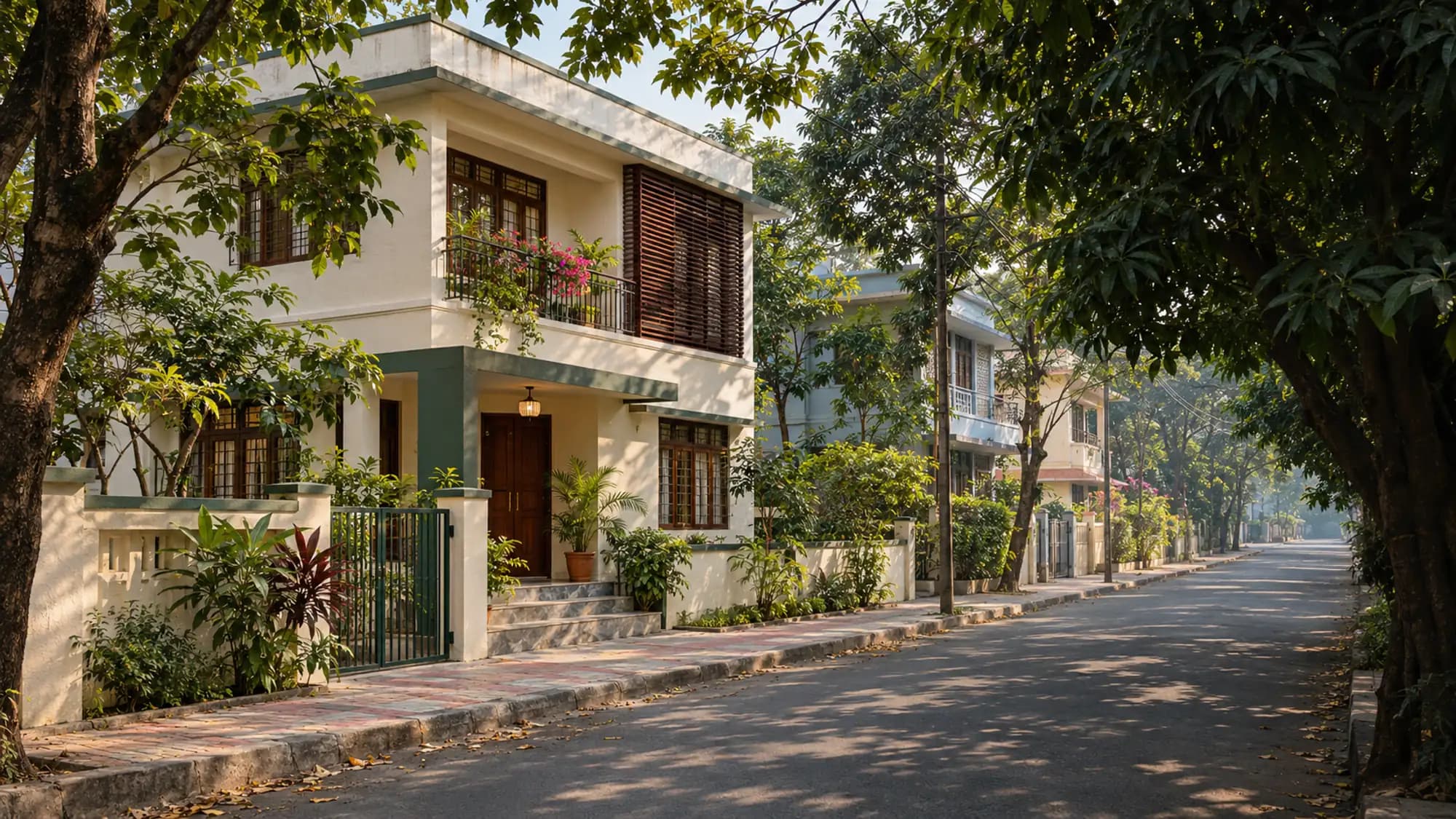
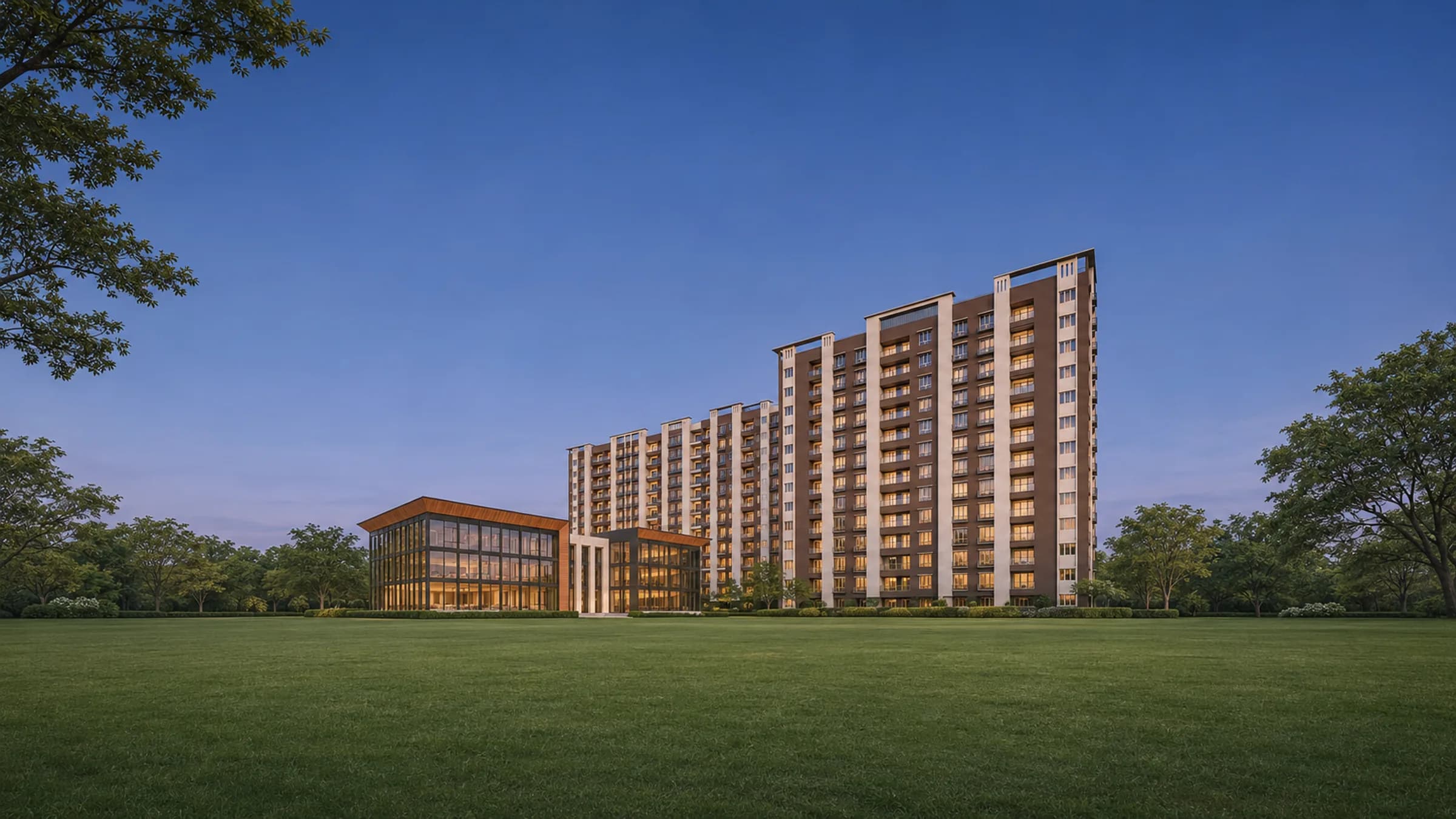
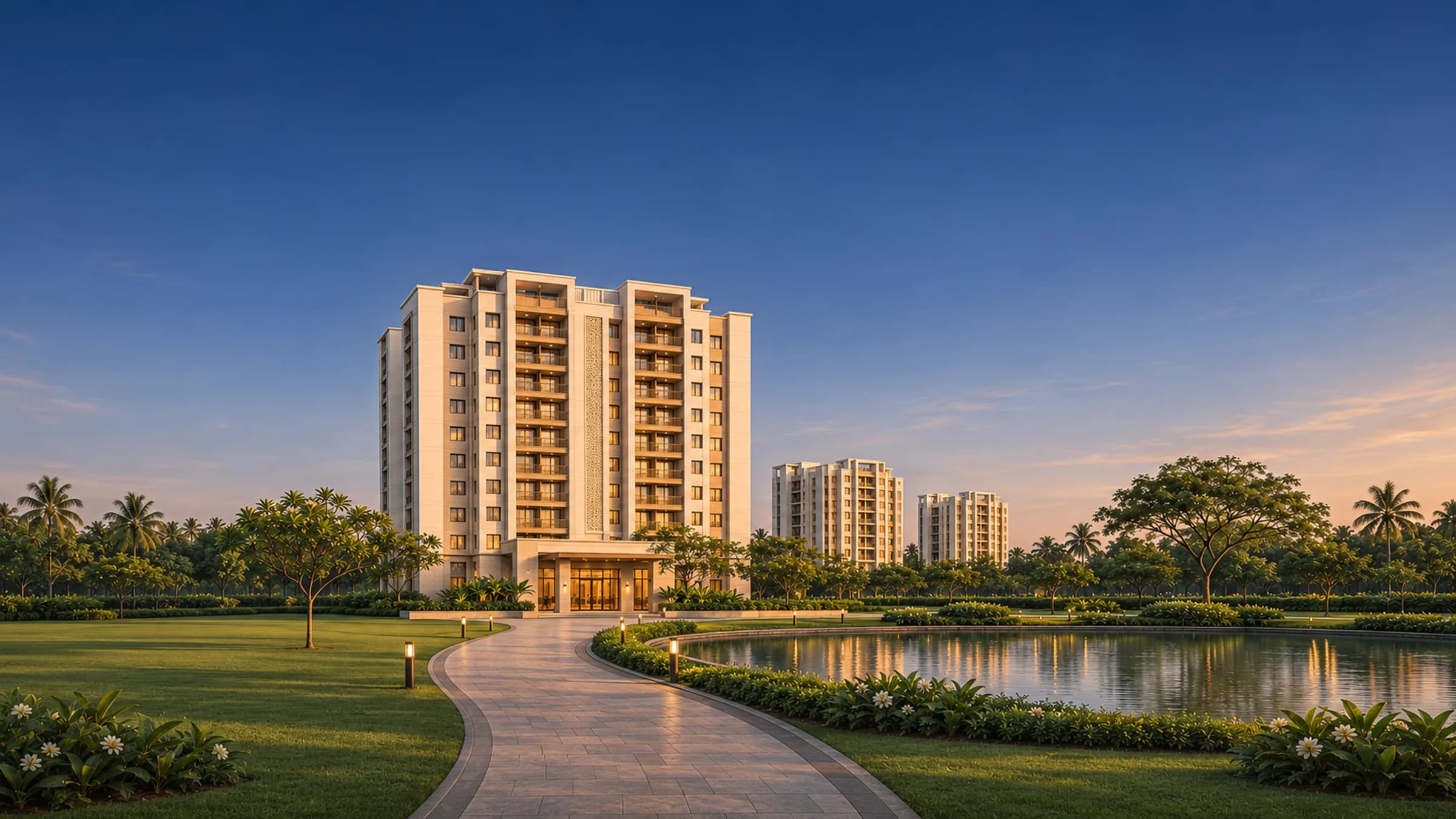
Land, flats, villas and commercial buildings all begin the same way, as empty ground and a plan. The projects here stand at different points on that road, and each project page sets out what we know about it.
01
A bare plot
The land is measured and its boundary is marked.
02
A plan, then a frame
The building is drawn on paper first: how it stands and how it is reached. Then the frame rises, floor by floor.
03
A landmark
The finished building stands with its arcade and its crown, and what is known about it sits on its own page.
On every project page
What a project page tells you
Location
The locality, the town and the district, so you know exactly where it is.
Starting price
A starting price, or a note that the price is shared on enquiry. A price is only a starting point until it is in the written agreement.
Amenities
What the project offers, listed plainly next to its key details.
Registration
The RERA registration number where the project needs one, so you can check it on the official register.
Plain answers. None of them replaces reading the paper for your own plot.
How should I use the project catalogue to compare different offers?
Choose the property type and area that fit your needs, then open the individual entries rather than comparing their cover pictures alone. Keep a note of the exact property, what is included and what remains unanswered. Compare current written information for each offer before treating the catalogue as a shortlist for visits.
What does a project card tell me, and what should I open next?
A card is a route to a fuller entry, not the complete proposal for a transaction. Open the project page to read its location, property type and available details. Ask which phase or unit the information concerns, and request a current written explanation wherever a summary leaves the scope of the offer unclear.
Can I compare projects in different areas from this page?
Yes, but compare the practical consequences of each location as well as the property description. Read the relevant area guides, plan the journeys that matter to you and keep location-dependent checks separate. A similar-looking property in another area may involve different access, services, land records or responsibilities that need independent review.
How can I tell which parts of two offers are actually comparable?
Use matching categories: the exact property interest, the stated area measure, the facilities included and the obligations left to the buyer. Write down differences rather than forcing them into one headline comparison. If descriptions use different terms, ask the sellers to explain those terms against their respective drawings and proposed agreements.
What if the catalogue does not show the property type I need?
Use the contact option to describe the property type, preferred location and intended use. Say which requirements are essential and which you can change. An empty result or a general category page does not establish what a seller can supply; ask for a specific current offer before planning a visit or further checks.
Should I treat a project count as a count of available units?
No. A catalogue count describes entries, while an entry may cover a development, phase or property type rather than a particular available unit. Ask the responsible contact to identify what is actually being offered now. Keep the unit or plot reference attached to subsequent documents, questions and any arrangement to inspect it.
How do I avoid mixing up phases with similar project names?
Record the project name together with the phase, location, seller and exact property identifier. Ask which plan and documents apply to that reference, especially when several entries share a larger development name. Do not carry a facility, timetable or document from one phase into another comparison without written confirmation that it applies.
What should my comparison note contain before I contact the team?
Include the project names, the area or property type you prefer, your intended use and the questions that prevented a decision. Mention practical visit needs without attaching sensitive personal records. Separating your requirements from the seller’s claims makes the first conversation clearer and helps the team address the correct entry.
How do the project pages and buyer guides work together?
A project page describes a particular listing; a buyer guide helps you frame the checks for that kind of decision. Read both and turn the general guidance into questions about the exact property. Neither a listing nor an article replaces checking the current documents, inspecting the site or obtaining independent professional advice.
What should I confirm before visiting several shortlisted projects?
Confirm which exact properties can be inspected, their meeting points, the order of visits and who will attend. Ask whether you will see the offered property or a sample space. Bring the same comparison questions to each visit, while leaving time to record differences and request documents for anything you cannot verify on site.
Which papers should I ask for before I book in a project?
Ask to see them on paper, not in a message: the documents that show who owns the land, the sanctioned plan, the draft agreement for sale and any approval letters the seller holds. Keep a copy of everything you are shown. Bring someone you trust, or your own lawyer, to read them with you, and take your time before you sign or pay anything.
Does a project have a registration number?
This page shows a registration number only when the seller has supplied one for the project, and we have not checked it for you. Look up any number you see on the state real estate authority's own website and compare the project name, the address and the promoter. If no number is shown, ask the seller in writing why not.
What are the stages of buying a property in a project?
Usually: an enquiry, a site visit, a booking, a written agreement for sale, instalments linked to the stages written in that agreement, possession and finally the registration of the deed. Ask for the schedule of payments before you pay anything at booking, and keep every receipt. This page does not set the amount or date of any stage; the written agreement does.
When will I get possession?
Possession is whatever the agreement for sale says, and this page promises no date. Ask the seller for the date written in the agreement, for what happens if it is missed, and for the papers handed over at possession: the completion papers for a building, or the demarcation and deed for land.
Can I take a home loan for a project?
Many buyers do, but every lender decides for itself. A lender usually looks at the papers of the project and of the seller as well as your own income records. Ask the seller which lenders have already read the project's papers, then ask your own lender what it needs. The estimator on this page is an illustration only.
I live outside India. Can I buy in a project?
The rules for buyers who live abroad cover how the money is paid, which account it comes from and which kinds of property may be held. Rules change, so ask the team how it works for a project, check with your bank or an adviser, and give a power of attorney only on a paper your own lawyer has read.
How do I arrange a site visit?
Use a contact button on this page, or send the enquiry form, and tell us the day and the number of people. Carry an identity proof, ask to see the project's papers and the actual home or plot, and photograph the road that leads to it, the neighbouring buildings and any notice boards you see.
What should I know before I sell what I buy here?
You may sell what you own, within what the agreement and the law allow. Before you buy, ask whether the agreement limits a transfer, whether any association fee or dues must be paid first, and what papers a later buyer would need. This page says nothing about what a future sale could bring.
Who looks after the common areas, and what does it cost to maintain them?
Ask who maintains the roads, drains, lights, lifts and gardens, what the monthly charge covers, how it is set, who holds any deposit and what happens to the fund when the residents' association takes over. Get the answers in writing, because maintenance is a cost that continues long after possession.
What should I ask the seller to put in writing?
Ask for the exact area in the agreement and how it is measured, every charge beyond the base amount, the schedule of payments, the possession date, the clauses that bind each side if a date is missed, the cancellation terms and the name of the person who will sign. A clear written answer is worth more than a promise.
What if I need to cancel after booking?
The terms are in the booking form and the agreement. Read the sections on refunds and deductions before you sign, ask what is returned if you cancel and how soon, and note the date of every receipt. This website does not set or change the seller's terms; ask the team how cancellation is handled for a project.
How does Versatile Realty earn from a sale, and is anything charged here?
Ask the team how it works for a project and ask for the answer in writing. Nothing is charged for using this website. Whoever asks you for money, ask for the reason in writing and a receipt, and do not pay anyone who contacts you outside the channels listed on our Contact page.
Are the pictures and details on this page final?
Pictures may include illustrations as well as photographs. Confirm what each image represents for the specific property; the Disclaimer explains the use of illustrations. Check the seller's area, layout, amenities and specifications against the agreement and current site. A site visit is the surest way to see how the home or plot really looks before you decide.
How do I find out what it is like to live around a project?
Visit the area at different hours, walk the lanes, find the nearest shops, schools and clinics, and talk to people who already live nearby. Read the place's own page on this website for what to ask on paper, and note how the road, drainage and water look after rain, not only on a bright day.
May I bring my own lawyer or adviser?
Yes, and we would encourage it. Share the papers with them before you pay, let them ask the seller their own questions, and wait for their reply. A buyer who takes advice before booking is better placed to spot a missing paper or an unclear clause than one who is asked to hurry.